
From Opportunity to Outcome
How municipalities can use strategic grant support to fund priorities, strengthen public services, and reduce reliance on local tax dollars.
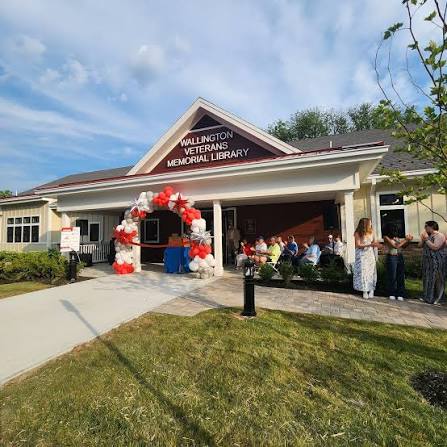 For decades, Wallington had a problem many municipalities would recognize.
The Borough needed a modern public library. Its existing library had occupied what was originally intended as a temporary location above the Department of Public Works for generations. Local officials, the Library Board and the community had a vision for something better. What they needed was a viable way to help pay for it.
Bruno Associates collaborated with Wallington to pursue funding through New Jersey’s highly competitive Library Construction Bond Act. The result was a $1,525,475 state grant toward construction of a new public library. Only 38 projects statewide were selected for funding from more than 129 applications during that round.
Today, that grant is no longer an award announcement or a line on a municipal spreadsheet.
It is the Wallington Veterans Memorial Library, a completed public facility serving the community every day.
That distinction matters.
Municipalities do not pursue grants because they want grants. They pursue them because they have roads to rebuild, parks to improve, firefighters to hire, equipment to replace, water systems to modernize and community facilities residents expect their local government to provide.
A successful grant strategy connects those priorities with funding that can help make them achievable.
That has been the business of Bruno Associates for more than five decades.
The problem is rarely a lack of good projects.
Walk into almost any municipal building in New Jersey and there is no shortage of worthwhile ideas.
The engineer has roads, drainage systems and utility infrastructure requiring investment. Police and fire departments have equipment, staffing and technology needs. Recreation officials have parks and facilities they want to improve. Administrators are balancing capital priorities against operating budgets. CFOs are managing debt, appropriations and existing funding sources.
The challenge is that all of those people already have important jobs to do.
Grant funding exists across a fragmented landscape of federal departments, New Jersey agencies, counties, authorities, foundations and specialized programs. Opportunities open and close throughout the year. Eligibility changes. Funding priorities shift. Some programs provide relatively modest awards for equipment or planning. Others can fundamentally change the economics of a multimillion-dollar capital project.
Keeping pace with that environment is a professional responsibility of its own.
That is the gap Bruno Associates was created to fill.
The firm was founded in 1971 after John R. Bruno Sr., who had served as press secretary to New Jersey Governor Robert B. Meyner, recognized that local governments frequently lacked the dedicated capacity needed to pursue and administer the growing number of state and federal funding programs available to them.
More than five decades later, the underlying problem is remarkably similar.
Municipal government has become more complex.
So has public funding.
The question is not whether municipal staff are capable.
An experienced administrator can submit a grant application. So can a CFO, police chief, engineer or department head.
The better question is whether that is the best use of their limited time, and whether something as important as outside funding should depend on which municipal employee happens to have enough capacity when an opportunity arises.
When responsibility for grants is dispersed across departments, it inevitably competes with their primary responsibilities. An application deadline may arrive while a CFO is preparing a budget, an administrator is dealing with personnel and governing-body matters, an engineer is overseeing construction and a police chief is running a department.
The opportunity cost can be difficult to see because missed funding never appears as an expense in the municipal budget.
There is no purchase order for the grant opportunity a municipality never discovered.
There is no line item for the capital project delayed because an appropriate funding source was not pursued.
There is no invoice for the staff hours spent years later reconstructing the requirements and history of an award after personnel have changed.
But those costs are real.
Its role is not to replace administrators, CFOs, engineers, attorneys, department heads or elected officials. It is to help those professionals accomplish more by bringing sustained grant expertise and continuity to the municipal team.
Winning once is good. Building on success is better.
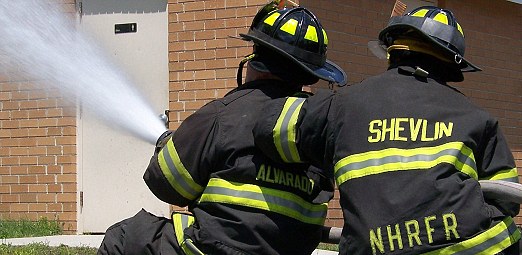 North Hudson Regional Fire & Rescue provides a powerful example.
NHRFR protects Guttenberg, North Bergen, Union City, Weehawken and West New York, five densely populated Hudson County communities with an operational environment that includes older urban housing, high-rise development, major transportation infrastructure and the Hudson River waterfront.
For the department, staffing is not an abstract budget issue. It directly affects how many firefighters are available when an alarm comes in.
Working with Bruno Associates, NHRFR competed successfully for $2,052,834 through FEMA’s FY2024 Staffing for Adequate Fire and Emergency Response, or SAFER, Program, allowing the department to hire 12 additional firefighters.
Then it did it again.
In FY2025, NHRFR secured another $1,710,695 SAFER award to hire 10 additional firefighters.
Together, the two consecutive competitive awards represent approximately $3.76 million in federal funding supporting 22 additional firefighter positions.
The significance goes beyond the dollar amount.
One successful grant can address an immediate need. Sustained grant strategy allows a public agency to build on prior successes as its operational needs evolve.
That is a much more powerful model than treating each grant opportunity as an isolated transaction.
Grants should follow municipal priorities, not the other way around.
One of the easiest mistakes in public funding is confusing available money with useful money.
A grant is not valuable simply because it exists.
The strongest projects begin with a legitimate municipal priority and then determine whether outside funding can accelerate it, expand it or reduce the burden it would otherwise place on local taxpayers.
Hackensack provides a useful example.
Like many redeveloping New Jersey communities, the City has experienced substantial growth in its downtown. Thousands of new residential units have changed Main Street and increased demand for public amenities and open space.
A vacant property at 155 Main Street presented an opportunity. The approximately 7,500-square-foot parcel had remained undeveloped following a major fire in 2018.
Working with Bruno Associates, Hackensack pursued funding through the New Jersey Department of Environmental Protection’s Green Acres Program.
In 2026, the project was approved for $1.4 million in Green Acres funding to help the City acquire the property and preserve it as a permanent public pocket park in the heart of downtown. The award provides the funding necessary for the acquisition without requiring the City to contribute its own funds toward the purchase.
The significance is not simply that Hackensack received $1.4 million.
Outside funding gave the City a way to advance a broader planning objective: preserving permanent public open space within an increasingly dense downtown while limiting the burden on local taxpayers.
That is what effective grant strategy looks like when it begins with the community’s goals.
The work does not end when the award arrives
Grant announcements get attention.
Grant administration usually does not.
Yet for municipalities, what happens after an award can be just as consequential as winning it.
A government may receive funding today that remains active for several years. During that time, personnel change. Projects encounter delays. Construction schedules move. Procurement takes longer than expected. Reimbursement requests must be submitted. Reports come due. Funding agencies request documentation. Programs impose requirements that may differ considerably from a municipality’s normal operating procedures.
Winning an award therefore creates an asset, but it also creates a responsibility.
Bruno Associates has built its municipal relationships around both sides of that equation.
The firm’s work extends beyond identifying funding and preparing applications. Bruno Associates supports clients as awards move through implementation, reimbursement, reporting and eventual closeout. That continuity becomes particularly valuable when an award lasts several years and the people responsible for implementing the project are no longer the same people who participated in the original application.
Institutional knowledge matters.
So does knowing what a municipality committed to do when it accepted the funding.
This is also increasingly important with major federal capital funding. Congressional appropriations and other federally funded infrastructure and community-development projects can bring significant resources into a municipality, but they also introduce federal implementation, reimbursement and compliance responsibilities that can continue long after the initial funding announcement.
Securing the funding is only part of the job.
The project still has to succeed.
A simple test for municipal leaders
There is a straightforward way for a mayor, administrator or CFO to evaluate whether their municipality has sufficient grant-management capacity.
They should be able to determine, without reconstructing the answer from scattered emails, spreadsheets and departments:
- What grant awards are currently active?
- How much funding remains available?
- What deadlines, reimbursements and compliance obligations are coming next?
- What applications are currently pending?
- And which major projects in the municipality’s capital plan have realistic outside funding opportunities?
If those questions are difficult to answer, the issue is not that municipal staff are failing.
It is that grant funding has become too important and too complicated to treat as an incidental responsibility.
That is precisely the problem Bruno Associates is designed to solve.
Municipal officials notice the difference.
The clearest evidence comes from the public officials who work with the firm.
Saddle Brook Clerk Pete LoDico described the impact directly:
“Without Bruno Associates, many of our capital improvements would not have happened.”
David Sireci, who serves as CFO in two municipalities utilizing the firm, put the capacity question just as plainly:
“Trying to do all those grant applications and follow up on your own will not get you the same outcome!”
North Arlington Mayor Dan Pronti has credited the Borough’s relationship with Bruno Associates with substantially increasing awareness of and access to grant opportunities aligned with projects the municipality actually wants to undertake.
And in Wallington, where the long-awaited public library ultimately became a completed building, Borough Administrator Jennifer Appice has credited the firm not simply with identifying funding opportunities, but with helping advance infrastructure, public-safety and community projects while navigating the requirements accompanying those awards.
The common thread is not simply writing.
It is capacity.
The value is measured in what gets done.
Bruno Associates’ work spans transportation, water and sewer infrastructure, public safety, parks and recreation, environmental projects, community facilities, public health and other areas of local government.
The portfolio ranges from relatively small equipment awards to multimillion-dollar competitive grants and federal appropriations supporting major public infrastructure and facilities.
That breadth matters because municipal priorities do not fit neatly into a single grant program.
A $50,000 award that provides equipment a department genuinely needs can be an excellent outcome. A multimillion-dollar infrastructure grant can fundamentally change a capital plan. A federal staffing award can put firefighters on the street. Open-space funding can preserve property for public use. A federal appropriation can make a long-planned sewer, public-safety or community-facility project financially achievable.
The relevant question is not simply:
How much money did you win?
It is:
What did that funding allow the community to accomplish?
In Wallington, it helped turn a decades-old need into a modern public library.
In North Hudson, consecutive awards are supporting 22 additional firefighters.
In Hackensack, it is helping turn a long-vacant downtown property into permanent public open space.
Those outcomes tell a more meaningful story than a lifetime tally of dollars secured.
What a grant consultant can, and cannot, do.
No consultant can manufacture eligibility.
No consultant can guarantee that a competitive federal or state program will select an application.
And no outside firm can substitute for engaged municipal leadership, capable professional staff or a well-conceived project.
Those limitations do not diminish the value of professional grant capacity.
They define it.
A good municipal grant consultant helps a community make better use of the projects, people and priorities it already has.
That means helping ensure legitimate funding opportunities are not overlooked, competitive projects receive the attention they deserve and successful awards remain successful after the congratulatory announcement is over.
The consultant becomes another member of the municipality’s professional team, alongside its administrator, engineer, attorney, auditor, planner, CFO and department heads, all focused on a common question:
How much of what this community wants to accomplish can be advanced with resources outside the local tax base?
For municipalities facing aging infrastructure, rising costs, public-safety needs and persistent pressure to deliver more without continually asking taxpayers to pay more, that is not a minor question.
More than five decades later, the original problem remains.
New Jersey local government has changed considerably since Bruno Associates was founded in 1971.
The funding environment has changed even more.
There are larger federal programs, increasingly specialized state initiatives, more complicated compliance requirements and an enormous number of potential funding sources competing for the attention of already-busy public officials.
Yet the fundamental problem remains.
Municipalities almost always have more worthwhile projects than unrestricted money available to fund them.
The communities that make the most of outside funding are not necessarily those with the longest wish lists.
They are the ones that consistently connect their priorities to opportunity and maintain enough continuity to carry those opportunities from concept to application, from application to award and from award to completed project.
That is where Bruno Associates has built its business.
Not around the promise that every application will win.
Not around pursuing funding simply because it is available.
And not around a headline number accumulated over decades.
The firm’s strongest argument is visible in the communities it serves.
It is a library that opens its doors.
A firefighter reporting for duty.
A vacant property becoming a park.
A road repaired.
A piece of critical equipment placed into service.
An infrastructure project moving forward years earlier than it otherwise might have.
For municipalities, that is the real return on grant funding.
And maximizing that return requires more than submitting applications. It requires dedicated expertise and continuity from the identification of an opportunity through implementation, reimbursement and closeout.
Municipal professionals are capable of doing many of those things themselves. The question is whether grant funding is important enough to deserve dedicated attention rather than becoming one more responsibility added to an already full municipal workload.
For communities serious about getting the greatest possible value from outside funding, investing in dedicated grant expertise is not simply another professional-service expense.
It is part of the capacity required to turn municipal priorities into funded, completed projects.